English
 中文
中文

1. Wi-Fi 7: Reshaping the High-Speed Wireless Experience
①Performance breakthrough
Rate Surge: Supports 320MHz bandwidth and 4096-QAM modulation, delivering a theoretical peak throughput of up to 46 Gbps—more than triple that of Wi‑Fi 6—satisfying the demands of 8K video streaming (100 Mbps+) and cloud-based real-time rendering.
Multi-Link Operation (MLO): Simultaneously transmits data across the 2.4 GHz, 5 GHz, and 6GHz bands, significantly reducing latency and enhancing reliability. In industrial IoT scenarios, latency is controlled at the microsecond level, enabling real-time precision manufacturing.
② Intelligent resource scheduling
MRU (Multi-Resource Unit) technology: Dynamically allocates multiple RUs to a single terminal, increasing spectrum efficiency by 40% and alleviating congestion in high-density access scenarios, such as smart home environments with over 50 concurrently connected devices.
Differentiated Service Assurance: Through MU-MIMO upgrades, priority is assigned to various services such as video conferencing and sensor data, delivering a “zero-wait” user experience.
2. Millimeter-wave communication: unlocking ultra-high-speed transmission
① Expansion of high frequency band capability
By leveraging the 24–100 GHz frequency band, transmission rates on the order of 10 Gbit/s can be achieved, providing foundational support for AR/VR and holographic communications, while increasing throughput by a factor of eight in high-density scenarios such as sports venues.
② Core Solutions
Intelligent beamforming: Phased-array antennas dynamically focus the signal, enhancing their ability to penetrate obstacles, while a hybrid architecture strikes a balance between performance and hardware complexity.
Non-line-of-sight relaying: By deploying reconfigurable intelligent surfaces (RIS) to establish signal reflection paths, the challenge of urban building blockage is overcome, resulting in a 60% improvement in indoor coverage.
3. Satellite-ground integrated communication
① Global coverage network
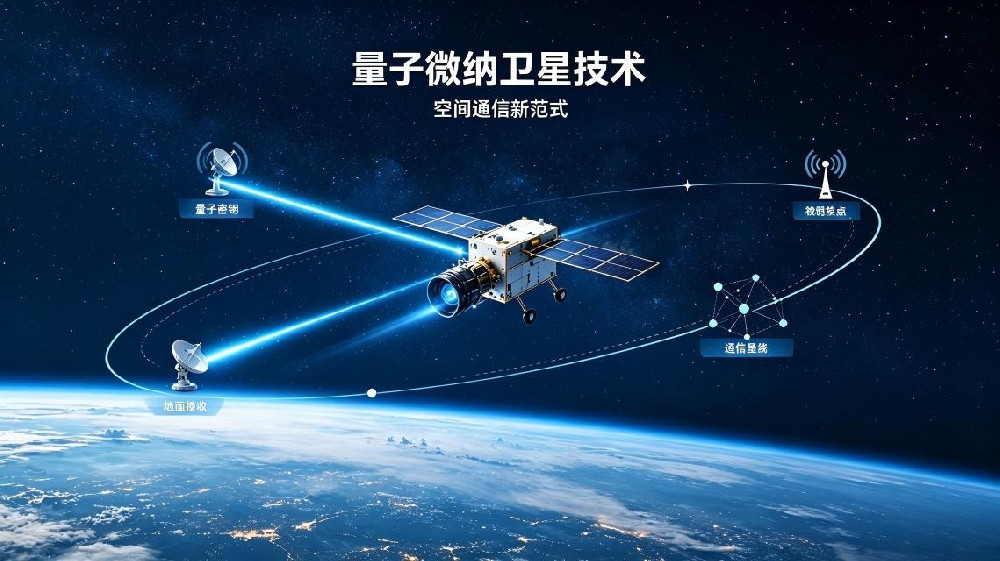
Low-Earth Orbit satellite constellations are integrated with terrestrial 5G networks to provide coverage in remote areas such as oceans and deserts, supporting emergency rescue operations and real-time communications for long-distance maritime shipping.
As satellite‑direct‑to‑cell technology becomes more widespread, the adoption rate among consumer devices is expected to exceed 30% by 2025.
② Collaboration of Star-to-Ground Resources
Dynamically allocates satellite bandwidth and terrestrial base station resources to handle burst traffic (such as live sports broadcasts), improving transmission efficiency by 50%.
4. Proprietary technology for short-range IoT
Technology | Characteristics | Emerging application scenarios |
RedCap | 5G lightweight module, power consumption reduced by 60% |
|
LoRaWAN | 10km wide coverage, battery life of 10 years |
|
Zigbee 3.0 | Self-organizing network anti-interference, support thousands of nodes access | Whole House Intelligent Control Center |
5. look-ahead direction: Intelligent Reflector (RIS)
Dynamic environment reconstruction: The surface of the metamaterial regulates the direction of electromagnetic wave propagation in real time, replacing the traditional repeater, and reducing the deployment cost by 70%. Typical scenarios: full-band coverage of subway tunnels and signal enhancement of complex factory environments.
Note: Technology evolution focuses on speed limit breakthrough (Wi-Fi 7/millimeter wave), seamless connection (star-ground fusion) and vertical scene deepening (low-power material link) to jointly build an "air, earth and sea" integrated digital base.