English
 中文
中文

Jiangsu Qianlue Information Technology Co., Ltd.
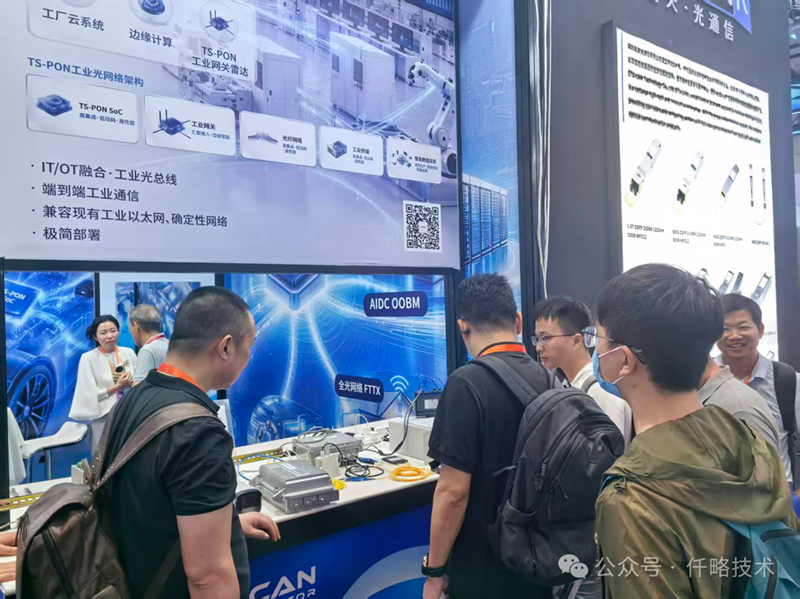
Located in Xiandong Cyber‑Valley Industrial Park, Zhenjiang, Jiangsu Qianlue Information Technology Co., Ltd. has been rooted in the private‑network communication and industrial optical transmission track since its establishment in 2016. The company devotes itself to independent R&D of domestic‑produced communication hardware and comprehensive industry‑oriented solutions. After a decade‑long commitment to technological innovation, it has grown into a national‑level high‑tech enterprise integrating communication equipment R&D, manufacturing, system integration and technical services. With its self‑developed TS‑PON time‑synchronized passive optical system, the company has filled the domestic technical gap in deterministic optical transmission for wide‑area industrial networks, and emerged as a core domestic‑made communication service provider for power grid, intelligent manufacturing, rail transit and smart security sectors.
I. Ten‑Year Scientific & Technological Accumulation — Building Self‑Controllable R&D Strength
Founded in 2016 with Mr. Xie Zuojian as its legal representative and a registered capital of RMB 10 million, Jiangsu Qianlue Information Technology Co., Ltd. is a provincial innovative small‑and‑medium‑sized enterprise and an enterprise certified under the intellectual property management standard system. The company has built a complete independent R&D system, holding a total of 23 authorized invention patents, utility‑model patents, software copyrights and enterprise trademarks. All core hardware and software are fully self‑controllable, eliminating external technical dependence on the underlying industrial communication technology.
The core R&D team has over ten years of experience in optical communication, time‑division multiplexing and time‑sensitive networking. In the early stage, the team focused on the R&D of MSTP/MSAP multi‑service transmission platforms, industrial Ethernet switches and voice dispatching equipment, and has long supported communication projects for State Grid, accumulating rich practical experience in deploying products under harsh industrial scenarios. Through continuous technological iteration, the company has broken the real‑time performance bottleneck of traditional PON networks and launched the TS‑PON Time‑Synchronized Passive Optical Multi‑Service Aggregation & Transmission System. This has formed its differentiated core competitiveness and delivered an all‑in‑one service capacity covering "hardware equipment + networking solution + remote operation & maintenance".
In terms of qualification and industrial layout, the company holds full‑chain business qualifications including self‑operated communication‑equipment production, goods import‑export and information‑system integration. Its products are applicable to complex environments such as indoor equipment rooms, field stations, strong‑electromagnetic workshops and rail‑transit corridors. All equipment indicators for operating temperature range, protection grade and power consumption meet strict industrial‑grade standards. The full‑series hardware product portfolio covers equipment from central‑site aggregation units down to field‑side terminals.
II. Self‑Developed TS‑PON Core Product — Setting New Standards for Deterministic All‑Optical Industrial Transmission
To address industry‑wide pain points of traditional Ethernet and commercial PON networks, such as high latency jitter, service contention conflicts, poor anti‑interference performance and complicated maintenance, Qianlue Technology has built the TS‑PON Time‑Synchronized Passive Optical Network System on an enhanced GPON architecture. Incorporating four self‑developed core technologies: high‑precision time‑slot scheduling, network‑wide clock synchronization, hard‑isolated bandwidth slicing and time‑sensitive transmission, the system delivers a highly‑reliable, low‑latency, wide‑coverage domestic‑made all‑optical infrastructure for industrial scenarios.
1. Underlying‑architecture Innovation for Millisecond‑Level Deterministic Transmission
At its core, TS‑PON adopts exclusive time‑slot allocation, assigning an independent uplink channel to each remote NODE terminal and eliminating data collision at the source. Stable end‑to‑end latency ≤ 2 ms is achieved, satisfying latency‑critical services such as power dispatching and industrial closed‑loop control. The system features a simplified two‑tier architecture: ROOT (central‑site aggregation) + NODE (field terminal) + passive ODN optical distribution network.
One 3U rack‑mounted ROOT aggregation chassis supports up to 8 PON line‑cards, with a maximum capacity of 128 connected field terminals; each PON port supports up to 16 NODE devices.
Single‑stage optical‑fiber transmission reaches 20 km, while cascaded‑relay mode enables ultra‑wide coverage up to 120 km.
Compatible with 1:2 / 1:8 / 1:16 passive optical splitters, supporting cascading of up to 16 field‑side nodes. It drastically reduces the deployment of active switches, simplifies cabling, and cuts costs for machine‑room construction and long‑term maintenance.
Thanks to the natural anti‑electromagnetic‑interference and lightning‑resistant properties of optical fiber, the whole system operates stably in harsh environments including high‑electromagnetic‑interference workshops, open‑air sites with thunder, rain and sand, and rail‑transit electromagnetic‑radiation zones, making it an optimal solution for long‑distance private‑network deployment.
2. Triple‑Service Converged Carrying — Single Optical‑Fiber Network for Full‑Scenario Requirements
Supported by physical TDM service isolation and hierarchical QoS scheduling, the TS‑PON system can carry three categories of services in parallel: high‑definition video surveillance, legacy serial‑port industrial control data and real‑time industrial control traffic for power utilities. One unified network replaces multiple independent private networks to realize multi‑system convergence.
High‑definition video service: Terminals are directly connected to IP cameras via 100‑Mbit/s Ethernet ports. VLAN isolation and dedicated bandwidth guarantee enable stable transmission of multi‑channel surveillance streams without stuttering.
Serial‑port industrial‑control service: Built‑in TTL/RS protocol conversion modules realize transparent IP transmission of serial data. Parameters for multiple serial ports can be configured independently, enabling low‑cost digital transformation for legacy industrial‑control equipment.
Industrial‑control service: Highest‑priority hard‑isolated channels prevent large‑volume video traffic from seizing control instructions, ensuring zero packet loss and low latency for dispatching and robot‑control data.
Three bandwidth allocation modes are available: fixed bandwidth, guaranteed bandwidth and best‑effort delivery. The bandwidth capacity can be smoothly upgraded up to 10 Gbps. Enterprises can expand digital services without reconstructing the existing optical‑fiber cabling infrastructure.
3. Four‑Redundancy Protection Mechanisms & Light‑Weight Remote O&M for Cost‑saving Efficiency
Qianlue builds a comprehensive stability‑protection system from three dimensions: link, networking and hardware equipment. Four safeguard mechanisms strengthen the reliability of industrial private networks:
1+1 dual‑link hot‑standby: Millisecond automatic switchover between dual physical ports, ensuring service‑free interruption and zero data loss during link failures.
Intelligent ring‑network self‑healing: Dual‑PON redundancy and uplink link aggregation are supported. The ring network can reconstruct itself within seconds upon faults to enhance network survivability.
Network‑wide intelligent optical‑path diagnosis: The central‑end unit monitors real‑time optical power, link loss and bit‑error rate across the whole network, sends automatic early‑warning alerts for fiber faults, and pinpoints failure locations.
Unified remote network management: Web‑based, CLI and SNMP management channels are available. Operators can remotely configure terminals, upgrade firmware and monitor device status, drastically reducing on‑site maintenance trips to remote field locations.
The hardware is optimized for lightweight outdoor deployment:
ROOT aggregation unit: total power consumption ≤ 30 W, optional redundant AC power supply.
NODE field terminal: compact size with power consumption below 5 W, DIN‑rail or wall‑mount installation, dual DC / PoE power supply (compatible with solar‑powered field supply).
Operating temperature: ‑20℃ ~ 70℃; IP30 dust‑proof & moisture‑proof rating; supports non‑stop 7×24‑hour operation.
III. Deep Engagement in Vertical Industries — Benchmark Digital Interconnection Projects Deployed in Multiple Fields
Drawing on years of project experience in State Grid communication support, Qianlue’s TS‑PON system is highly tailored to networking pain‑points across industries, and has been deployed at scale in five core scenarios:
Power distribution‑grid IoT: Carries monitoring data of distribution rooms, line‑fault acquisition signals and power‑dispatching commands. Its long‑distance passive architecture is well suited for deployment along extensive urban‑rural power‑distribution corridors.
Intelligent‑manufacturing factories for mines & industry: Converges machine‑vision streams, PLC control signals and factory surveillance footage, solving problems caused by strong electromagnetic interference and complicated multi‑device cabling inside workshops.
Smart roads & pan‑area security: Aggregates distributed cameras deployed on urban roads, industrial parks and scenic spots. Its 120‑km ultra‑long cascading capability fits long‑distance highway surveillance.
Rail‑transit‑side communication: Transmits on‑track equipment control signals, video streams and status‑acquisition data, leveraging optical‑fiber anti‑interference performance to adapt to rail‑transit electromagnetic environments.
Open‑air hydrological & meteorological IoT: Back‑hauls data collected by hydrological and meteorological monitoring stations at long distances. Low‑power terminals are compatible with solar‑power supply solutions for off‑grid field locations.
In addition, the system supports expansion with MESH wireless nodes. Hybrid networking combining optical‑fiber backbones and wireless MESH radio units delivers full‑coverage connectivity for hard‑to‑cable mountainous and lake‑side zones, further broadening application boundaries.
IV. Staying Committed to Independent Innovation — R&D Layout for Next‑Generation Industrial Optical‑Communication Technology
Riding the wave of industrial‑internet and new‑energy‑infrastructure construction, Jiangsu Qianlue has formulated its long‑term technology roadmap: continuously iterate the full TS‑PON hardware portfolio, launch dedicated versions for 10‑Gbps transmission, ultra‑long‑distance coverage and industry‑specific customization; deepen product adaptation to emerging tracks including Industrial Internet, 5G fronthaul and new‑type power systems; expand the R&D team and increase investment in underlying chips, scheduling algorithms and cybersecurity technologies, to improve the domestic‑made supporting capacity across the whole industrial chain.
Guided by its corporate philosophy: "Qianlue Smart‑Link, Technology Creates the Future", the company will keep focusing on self‑controllable deterministic optical‑transmission technology. It will deliver stable, low‑cost and easy‑to‑operate domestic‑private‑network communication solutions for all industries, and facilitate the high‑quality digital‑infrastructure upgrade of China’s industrial, energy and rail‑transit sectors.
TAG: